Water Risk from a Prolonged War with Iran

Markets have rightly fixated on what the Iran war means for oil and gas flows through the Strait of Hormuz—but in doing so, they have largely ignored a vulnerability that may prove even more destabilizing: the Middle East’s near-total dependence on desalinated water.[1]  The Gulf region supplies forty percent of the world’s desalinated water, and a sustained campaign against this infrastructure could trigger a humanitarian and economic catastrophe with cascading global implications.[2]

Get our insights direct to your inbox: SUBSCRIBE
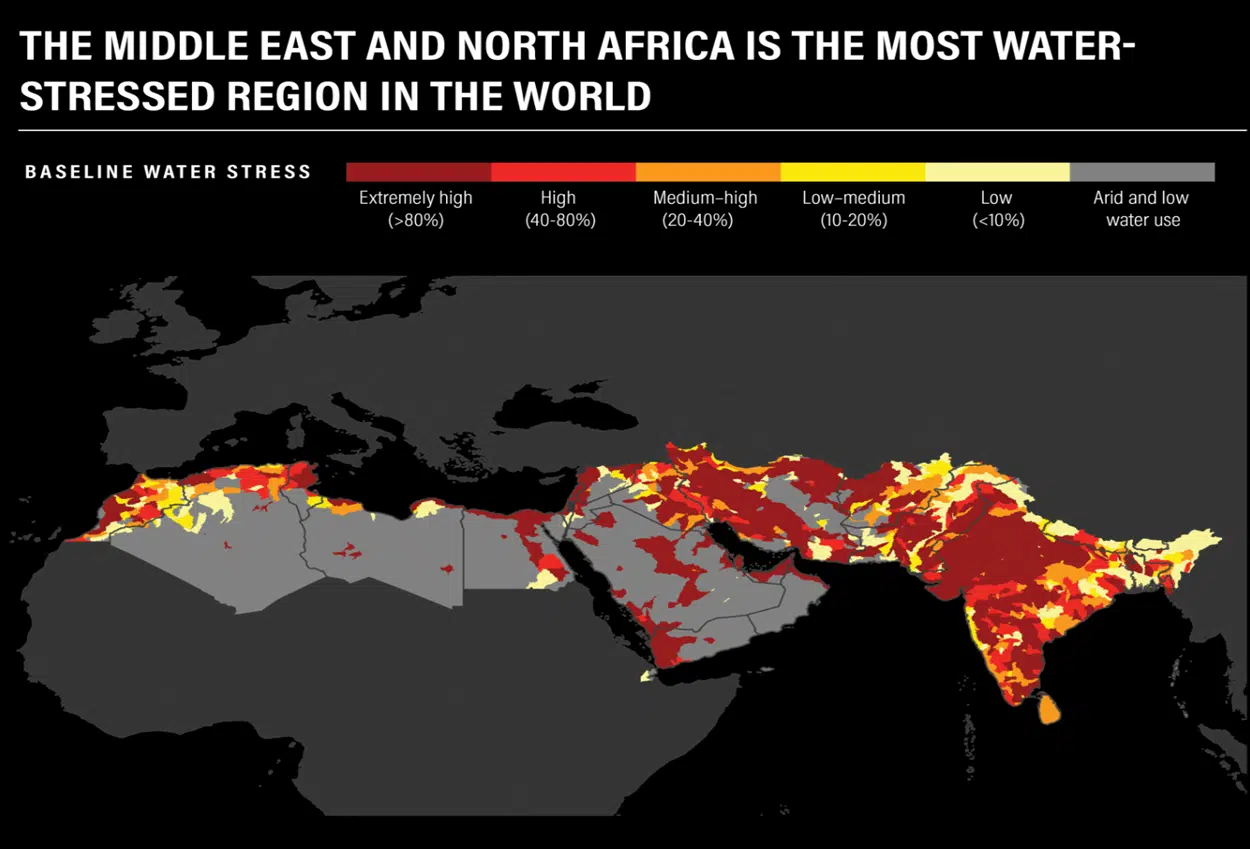
The Middle East’s dependence on desalination is extraordinary. In Qatar, desalinated water accounts for nearly ninety-nine percent of national supply; in Kuwait and Bahrain, approximately ninety percent; in Oman, eighty-six percent; in Israel, eighty percent; and in Saudi Arabia, roughly seventy percent.[3]  For the roughly one hundred million people across the Gulf who have no alternative freshwater source, the loss of this infrastructure would not be an inconvenience—it would be an existential crisis. [4] That risk is compounded by extraordinary concentration: just fifty-six facilities account for more than ninety percent of the Gulf’s total desalinated output, meaning a relatively small number of successful strikes could cripple water supply across multiple nations. [5]

This vulnerability has already been tested. On March 7, 2026, Iran’s foreign minister accused the United States of striking a desalination plant on Qeshm Island, reportedly disrupting water supply to thirty villages.[6]  Hours later, Bahrain disclosed that an Iranian drone had struck one of the country’s water treatment plants, marking the first time a Gulf state acknowledged such an incident during the conflict. [7] Kuwait and the UAE have each confirmed that their own water infrastructure took hits from incoming munitions in the opening weeks of the war.[8] These incidents, though limited, preview what systematic targeting could produce.

The consequences of escalation would be swift and severe. According to U.S. intelligence assessments, a successful campaign against Gulf water infrastructure could strip these nations of “the majority of their drinking water in days” and produce national crises persisting for months. [9] These plants are deeply intertwined with national power systems, so a well-placed strike would not just cut off water—it could knock out electricity across whole metropolitan areas, leaving authorities with little choice but to order mass evacuations.[10]
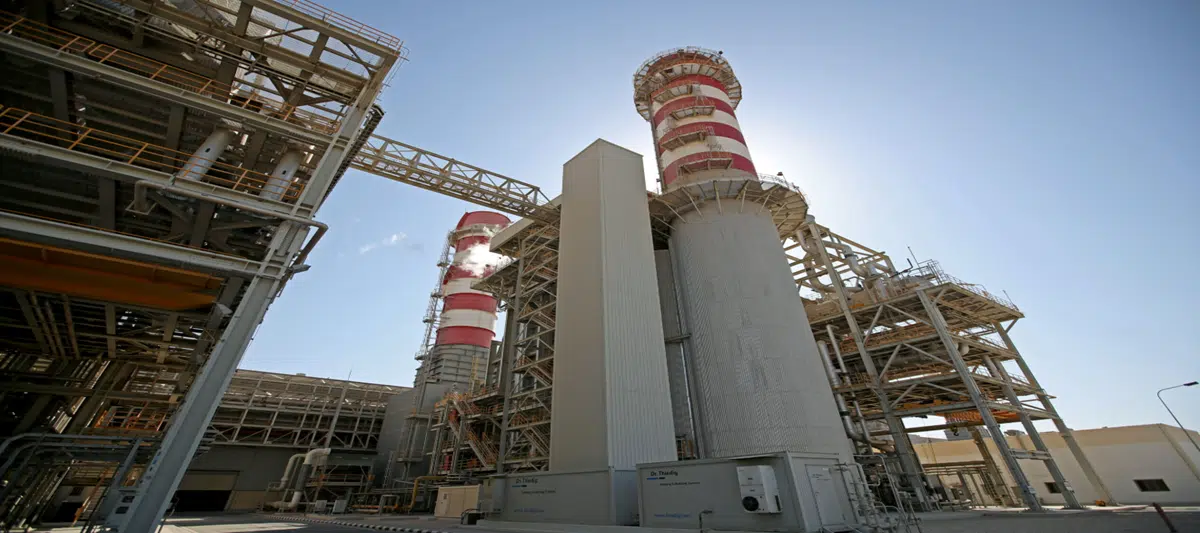
Source: Atlantic Council, General view of the world’s largest desalination plant using modern hybrid desalination technology at the Saline Water Conversion Corporation’s Ras al-Khair Power and Desalination Plant in Ras al-Khair, Saudi Arabia on October 8, 2020.

Iran itself is acutely exposed. Iran entered the war already buckling under a half-decade of relentless drought, drawing down more than four-fifths of its renewable freshwater supply each year—a trajectory that experts warn is approaching outright ‘water bankruptcy.'[11] Last year, precipitation came in forty percent short of historical norms, draining the reservoirs that feed Tehran to barely one-eighth of their total volume.[12] Western trade restrictions and surging fuel prices have choked off Iran’s access to the equipment and capital needed to maintain or grow its desalination network—leaving the country with almost no capacity to absorb wartime damage to the plants it already has.[13]

The broader regional picture is equally alarming. The Middle East already sits at the extreme end of global water vulnerability: WRI data shows that more than four in five residents face acute scarcity today, and by mid-century that ratio is projected to encompass the entire population.[14]  The Pacific Institute’s most recent tally recorded 844 episodes of water-linked violence worldwide in 2024—one-fifth more than the year before, and a trajectory that shows no sign of reversing. [15] The academic literature on water and conflict points to a dangerous feedback loop: when supplies run short, social tension rises; that tension makes infrastructure a target; and once the infrastructure is gone, the shortage that started the cycle becomes dramatically worse. [16]

The Gulf’s cumulative spending on desalination since 2006 exceeds $53 billion, and Riyadh has earmarked a further $80 billion for new plants—expenditures that reflect not ambition but bare necessity. [17, 18] These are not discretionary expenditures—they represent the minimum cost of sustaining habitability. International law, including Article 54 of the 1977 Additional Protocol I to the Geneva Convention, explicitly prohibits attacks on drinking water infrastructure critical to civilian survival, yet precedent from Kuwait, Yemen, Gaza, and Ukraine demonstrates that these protections have consistently failed to deter such attacks.[19]

Some believe markets have priced in energy supply disruptions – something we think may prove wrong.

  1. As a reminder for our Financial Advisors: our models are available on a continuous basis, and most have been in production for over a decade.  If you are looking for simple, concentrated, low turnover, and tax efficient model portfolios we would like to talk with you.  KCR also offers a wide range of easy-to-use but sophisticated tools.  Our toolkits can help identify mispriced stocks with the best and worst risk/reward characteristics, estimate a stock’s duration and warn you when a company is engaging in low-quality accounting. Over the last 12 years, KCR has built and offers time-tested and class-leading products built by experienced and proven money managers for fixed to low prices.
  2. Kailash Capital Research, LLC ’s sister company, L2 Asset Management, runs market neutral, long/short, large-cap, and mid-cap long-only portfolios with a value and quality bias.  L2 employs a highly disciplined investment process characterized by moderate concentration, low turnover, high tax efficiency, and low fees. While nobody can predict the future, we believe the recent resurgence in risk-adjusted returns seen across all products is the beginning of what may be a long period where speculation is punished, and prudence and patience rewarded.
[1] Atlantic Council, “Attacks on desalination plants in the Iran war forecast a dark future,” Ginger Matchett, March 18, 2026.
[2] Atlantic Council, “Attacks on desalination plants in the Iran war forecast a dark future,” Ginger Matchett, March 18, 2026.
[3] Atlantic Council, “Attacks on desalination plants in the Iran war forecast a dark future,” Ginger Matchett, March 18, 2026.
[4] Atlantic Council, “Attacks on desalination plants in the Iran war forecast a dark future,” Ginger Matchett, March 18, 2026.
[5] Atlantic Council, “Attacks on desalination plants in the Iran war forecast a dark future,” Ginger Matchett, March 18, 2026.
[6] Bulletin of the Atomic Scientists, “Desalination, water, and war,” Peter Gleick, March 9, 2026.
[7] Bulletin of the Atomic Scientists, “Desalination, water, and war,” Peter Gleick, March 9, 2026.
[8] Atlantic Council, “Attacks on desalination plants in the Iran war forecast a dark future,” Ginger Matchett, March 18, 2026.
[9] Atlantic Council, “Attacks on desalination plants in the Iran war forecast a dark future,” Ginger Matchett, March 18, 2026.
[10] Atlantic Council, “Attacks on desalination plants in the Iran war forecast a dark future,” Ginger Matchett, March 18, 2026.
[11] World Resources Institute, “Iran War Could Worsen Middle East’s Water Woes,” Sarah Brown, March 20, 2026.
[12] World Resources Institute, “Iran War Could Worsen Middle East’s Water Woes,” Sarah Brown, March 20, 2026.
[13] Atlantic Council, “Attacks on desalination plants in the Iran war forecast a dark future,” Ginger Matchett, March 18, 2026.
[14] World Resources Institute, “Iran War Could Worsen Middle East’s Water Woes,” Sarah Brown, March 20, 2026.
[15] World Resources Institute, “Iran War Could Worsen Middle East’s Water Woes,” Sarah Brown, March 20, 2026.
[16] World Resources Institute, “Iran War Could Worsen Middle East’s Water Woes,” Sarah Brown, March 20, 2026.
[17] Atlantic Council, “Attacks on desalination plants in the Iran war forecast a dark future,” Ginger Matchett, March 18, 2026.
[18] Bulletin of the Atomic Scientists, “Desalination, water, and war,” Peter Gleick, March 9, 2026.
[19] Bulletin of the Atomic Scientists, “Desalination, water, and war,” Peter Gleick, March 9, 2026.
[20] Atlantic Council, “Attacks on desalination plants in the Iran war forecast a dark future,” Ginger Matchett, March 18, 2026.
[21] World Resources Institute, “Iran War Could Worsen Middle East’s Water Woes,” Sarah Brown, March 20, 2026.
[22] Atlantic Council, “Attacks on desalination plants in the Iran war forecast a dark future,” Ginger Matchett, March 18, 2026.
[23] World Resources Institute, “Iran War Could Worsen Middle East’s Water Woes,” Sarah Brown, March 20, 2026.
[24] Atlantic Council, “Attacks on desalination plants in the Iran war forecast a dark future,” Ginger Matchett, March 18, 2026.
[25] Robert Muggah, “The global price tag of war in the Middle East,” World Economic Forum, March 12, 2026.
[26] Joseph Glauber, “The Iran war: Potential food security impacts,” IFPRI Blog, March 6, 2026.
[27] Bram Govaerts and Sharon Burke, “The Iran War Could Trigger a Global Food Crisis,” Project Syndicate, March 13, 2026.
[28] Michael Werz, “The Iran War’s Hidden Front: Food, Water, and Fertilizer,” Council on Foreign Relations, March 13, 2026.
[29] Joseph Glauber, “The Iran war: Potential food security impacts,” IFPRI Blog, March 6, 2026.
[30] Bram Govaerts and Sharon Burke, “The Iran War Could Trigger a Global Food Crisis,” Project Syndicate, March 13, 2026.
[31] Michael Werz, “The Iran War’s Hidden Front: Food, Water, and Fertilizer,” Council on Foreign Relations, March 13, 2026.
[32] Joseph Glauber, “The Iran war: Potential food security impacts,” IFPRI Blog, March 6, 2026.
[33] Robert Muggah, “The global price tag of war in the Middle East,” World Economic Forum, March 12, 2026.
[34] Bram Govaerts and Sharon Burke, “The Iran War Could Trigger a Global Food Crisis,” Project Syndicate, March 13, 2026.
[35] Michael Werz, “The Iran War’s Hidden Front: Food, Water, and Fertilizer,” Council on Foreign Relations, March 13, 2026.
[36] Bram Govaerts and Sharon Burke, “The Iran War Could Trigger a Global Food Crisis,” Project Syndicate, March 13, 2026.
[37] Michael Werz, “The Iran War’s Hidden Front: Food, Water, and Fertilizer,” Council on Foreign Relations, March 13, 2026.
[38] Robert Muggah, “The global price tag of war in the Middle East,” World Economic Forum, March 12, 2026.
[39] Michael Werz, “The Iran War’s Hidden Front: Food, Water, and Fertilizer,” Council on Foreign Relations, March 13, 2026.
[40] Michael Werz, “The Iran War’s Hidden Front: Food, Water, and Fertilizer,” Council on Foreign Relations, March 13, 2026.
[41] Robert Muggah, “The global price tag of war in the Middle East,” World Economic Forum, March 12, 2026.
[42] CFR, “How the Iran War Ignited a Geoeconomic Firestorm,” March 17, 2026 (E. Fishman).
[43] CFR, “How the Iran War Ignited a Geoeconomic Firestorm,” March 17, 2026 (E. Fishman).
[44] FPRI, “Experts React | Effects of the Iran War on Energy Markets,” March 23, 2026 (G. Pollock).
[45] FPRI, “Experts React | Effects of the Iran War on Energy Markets,” March 23, 2026 (J. Busby; G. Pollock).
[46] CFR, “How the Iran War Ignited a Geoeconomic Firestorm,” March 17, 2026 (E. Fishman).
[47] CFR, “How the Iran War Ignited a Geoeconomic Firestorm,” March 17, 2026 (B. Setser).
[48] CFR, “How the Iran War Ignited a Geoeconomic Firestorm,” March 17, 2026 (B. Setser).
[49] FPRI, “Experts React | Effects of the Iran War on Energy Markets,” March 23, 2026 (M. Hess).
[50] FPRI, “Experts React | Effects of the Iran War on Energy Markets,” March 23, 2026 (M. Hess).
[51] FPRI, “Experts React | Effects of the Iran War on Energy Markets,” March 23, 2026 (G. Pollock).
[52] FPRI, “Experts React | Effects of the Iran War on Energy Markets,” March 23, 2026 (M. Hess).
[53] FPRI, “Experts React | Effects of the Iran War on Energy Markets,” March 23, 2026 (M. Hess).
[54] CFR, “How the Iran War Ignited a Geoeconomic Firestorm,” March 17, 2026 (E. Fishman).
[55] CFR, “How the Iran War Ignited a Geoeconomic Firestorm,” March 17, 2026 (E. Fishman).
[56] FPRI, “Experts React | Effects of the Iran War on Energy Markets,” March 23, 2026 (M. Shagina).
[57] FPRI, “Experts React | Effects of the Iran War on Energy Markets,” March 23, 2026 (M. Shagina).
[58] CFR, “How the Iran War Ignited a Geoeconomic Firestorm,” March 17, 2026 (B. Setser).
[59] Robert Muggah, “The global price tag of war in the Middle East,” World Economic Forum, March 12, 2026.
[60] CFR, “How the Iran War Ignited a Geoeconomic Firestorm,” March 17, 2026 (R. Ferguson Jr.).
[61] CFR, “How the Iran War Ignited a Geoeconomic Firestorm,” March 17, 2026 (R. Ferguson Jr.).
[62] Robert Muggah, “The global price tag of war in the Middle East,” World Economic Forum, March 12, 2026.
[63] FPRI, “Experts React | Effects of the Iran War on Energy Markets,” March 23, 2026 (J. Busby; G. Pollock).
[64] Robert Muggah, “The global price tag of war in the Middle East,” World Economic Forum, March 12, 2026.
[65] FPRI, “Experts React | Effects of the Iran War on Energy Markets,” March 23, 2026 (E. Holland).

Disclaimer

The information, data, analyses, and opinions presented herein (a) do not constitute investment advice, (b) are provided solely for informational purposes and therefore are not, individually or collectively, an offer to buy or sell a security, (c) are not warranted to be correct, complete or accurate, and (d) are subject to change without notice. Kailash Capital Research, LLC and its affiliates (collectively, “KCR”) shall not be responsible for any trading decisions, damages, or other losses resulting from, or related to, the information, data, analyses or opinions or their use. The information herein may not be reproduced or retransmitted in any manner without the prior written consent of KCR. In preparing the information, data, analyses, and opinions presented herein, KCR has obtained data, statistics, and information from sources it believes to be reliable. KCR, however, does not perform an audit or seek independent verification of any of the data, statistics, and information it receives. KCR and its affiliates do not provide tax, legal, or accounting advice. This material has been prepared for informational purposes only and is not intended to provide, and should not be relied on for tax, legal, or accounting advice. You should consult your tax, legal, and accounting advisors before engaging in any transaction.

Nothing herein shall limit or restrict the right of affiliates of KCR to perform investment management or advisory services for any other persons or entities. Furthermore, nothing herein shall limit or restrict affiliates of KCR from buying, selling, or trading securities or other investments for their own accounts or for the accounts of their clients. Affiliates of KCR may at any time have, acquire, increase, decrease, or dispose of the securities or other investments referenced in this publication. KCR shall have no obligation to recommend securities or investments in this publication as a result of its affiliates’ investment activities for their own accounts or for the accounts of their clients.

© 2026 Kailash Capital Research, LLC – All rights reserved.

March 31, 2026 |

Categories: White Papers

March 31, 2026

Categories: White Papers
[cologin_link]

Share This Story, Choose Your Platform!